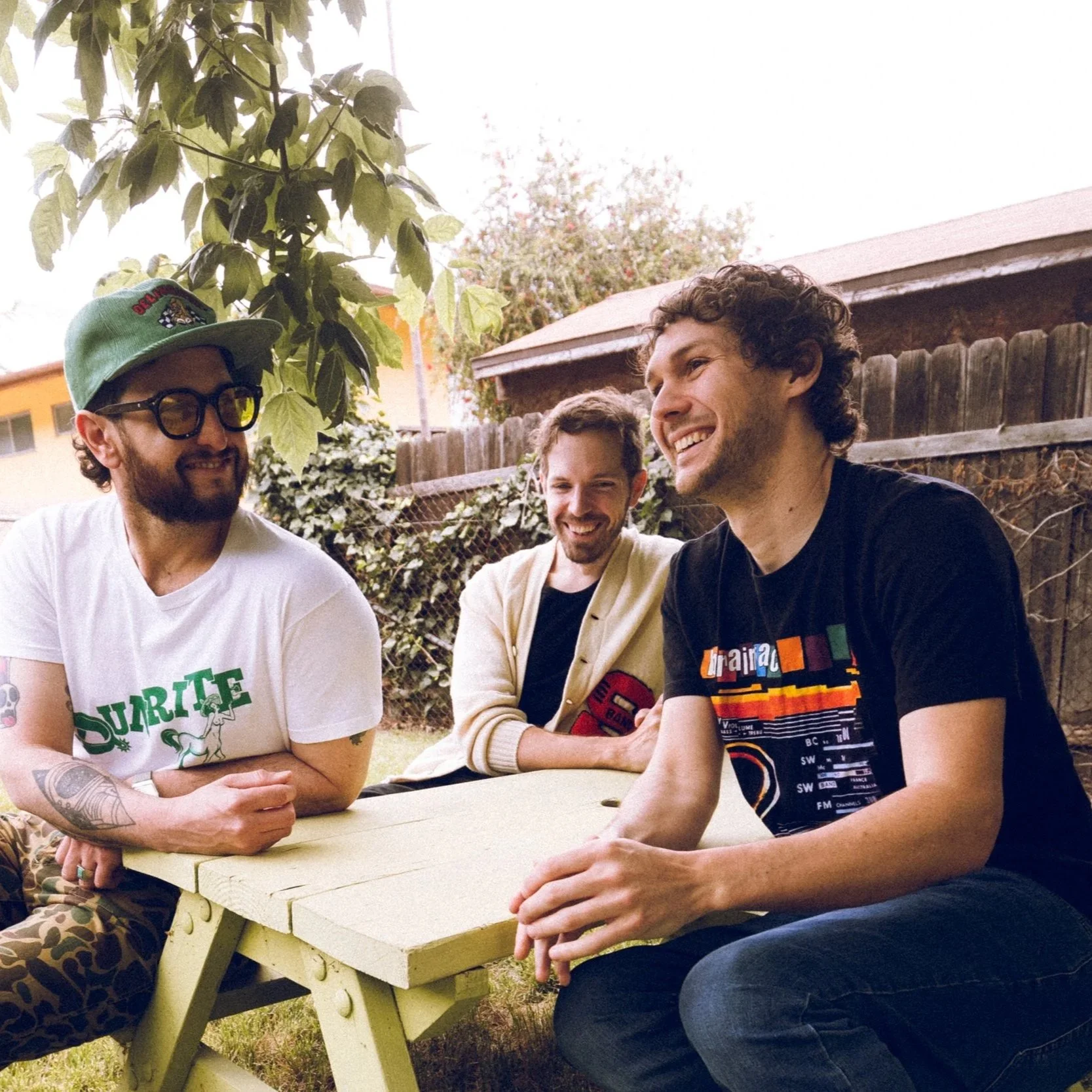
From the outside, coyote theory’s story looks like a textbook case of late-blooming virality. From the inside, it’s something far more rare: a band whose values never shifted, even as the audience multiplied. Hailing from Orlando, FL, the platinum-certified trio have spent years quietly building a catalog rooted in musicianship, emotional depth, and community. Their hybrid of alternative, indie, pop, and jazz has always defied easy categorization, and with more than 1 billion total streams to date, it’s now finding resonance with an entirely new generation of listeners.
When “This Side of Paradise” reemerged years after its 2011 release, it wasn’t just a viral moment, it was a validation of patience and foundation. In this interview, Coyote Theory unpack what it means to see a once-overlooked song take on new cultural life, how they’re translating renewed attention into something sustainable, and why longevity in today’s music economy starts long before the spotlight. As the band reenters the live space and rolls out new music through 2026, their approach offers a compelling blueprint.
“This Side of Paradise” blew up years after its original release and is currently approaching 1 Billion Streams! How did it feel to watch an older song suddenly find a massive new audience on TikTok, and how did that change your relationship to the song?
It wasn’t just an older song for us, it felt like it was this hidden track in the back of a used records shop that someone unearthed. When we released “This Side of Paradise” in 2011, we flirted with success, but it never quite happened. So we had this lightbulb moment that this was totally the, “even if one person loves our music, we’ve succeeded” mindset paying dividends. It only took one person to love this song and carry it with them for nearly a decade to help it find its audience.
Our relationship with it now is completely one of gratitude. We were always proud of making this song that shouldn’t work — 3/4 into 4/4, tempo changes, drumsticks clanking against hi-hat cymbals. However now reading all the stories of people creating moments with the song, through the song, and because of the song, it really just elevates it to be something beyond just our experience writing the thing.
A lot of artists struggle to build sustainable careers after a viral moment. How did you approach turning that sudden attention into something lasting and meaningful?
Work in progress! The first thing we did after reuniting the group was to start understanding if we could still do this. That meant musically, as personalities, financially, the whole nine. In many ways, it’s still the challenge we face. So much so that we named our debut record, “Still” as the perfect encapsulation of whether we still had what it takes. The best answer I can give is that everything shakes out to the foundation, so no matter what stage of building a career in music you may be at, take your time building a foundation that will stand up against all the weather it’s about to endure.
How has your creative process or sound evolved since the early days of This Side of Paradise? Are there sonic or lyrical directions you’re exploring now that might surprise fans?
One thing that’s been most surprising is how similar the concepts we gravitate towards are. We’re still having the same conversations about sonically exploring what us coyotes are, while lyrically there’s still this introspective bend that wants nothing more than to be mistaken for your favorite author’s prose. Old habits, new songs.
What’s next for coyote theory — new music, upcoming shows, or projects you’re excited to share with fans?
New music throughout the better part of 2025 and 2026. We’ve got a string of live shows into the new year, which is the first time we’ve played out in nearly a decade. More than anything, we’re looking forward to those gigs. Afterwards, we’ll start tracking our second album. Should be a lot of coyotes in the new year.
Who are some of your musical inspirations?
They range between the three of us. Myself, being a drummer, you’ll find little flares of Stewart Copeland (The Police) and Max Roach that explain the coyote’s obsession with hi-hats, while also having influence from Rudy Gajadhar (Gatsby’s American Dream) and Tony Thaxton (Motion City Soundtrack) that brings more melodic attention to the drum parts.
As a band, we are constant students of music and we’re pulling from reference points as wide as Steely Dan, Paul McCartney and Wings to Gorillaz, Oasis, and Mutemath.


You all met as teenagers and have grown into adulthood together, what impact has that had on your music and creative processes?
I often say that this band wouldn’t exist if I didn’t feel so determined to be in a band with Grayson. I literally showed up at one of his old band's gigs — one of maybe ten people there — stood front row, and told him after his set that we needed to start a band instead. I don’t know if he regrets it, but ever since then we’ve been on this whole adulthood rollercoaster together.
Having central connections like that, with these guys, is what makes this work. Kyle was singing for a band that we often gigged with growing up, so there’s just this total sense of community here. There’s never been this calculated, sterile decision-making on who’s a part of us coyotes, it’s always just been about being in the room with good, honest people.
How did you all come up with the band name “coyote theory”?
We were nameless, had been rehearsing five songs for about a month, and wanted to play a backyard show for as many friends as would show up (we ended up playing our entire set twice that night). We created list after list of names, and couldn’t come to a unanimous decision. Finally after coming home from a college economics class, I was on the phone with my friend Katie discussing this lack of band name situation, and I mentioned coyote theory. The whole idea of running after something, no matter how unrealistic success might be, and so long as you don’t acknowledge the improbability of it all then you may have a chance to succeed. It spoke to how the four of us in the room felt back then, so we went with it and didn’t look back.
If you had to describe the essence of coyote theory in one word, image, or story, what would it be — and why?
The band so niche it’s nice.
Our niche is deep, musically and emotionally. It’s also wide, with such a large breadth of people in this coyote community listening and making the songs their own. We aren’t out to sell out stadiums, but we love the niche we’re carving out to sustain a little life in the music industry.